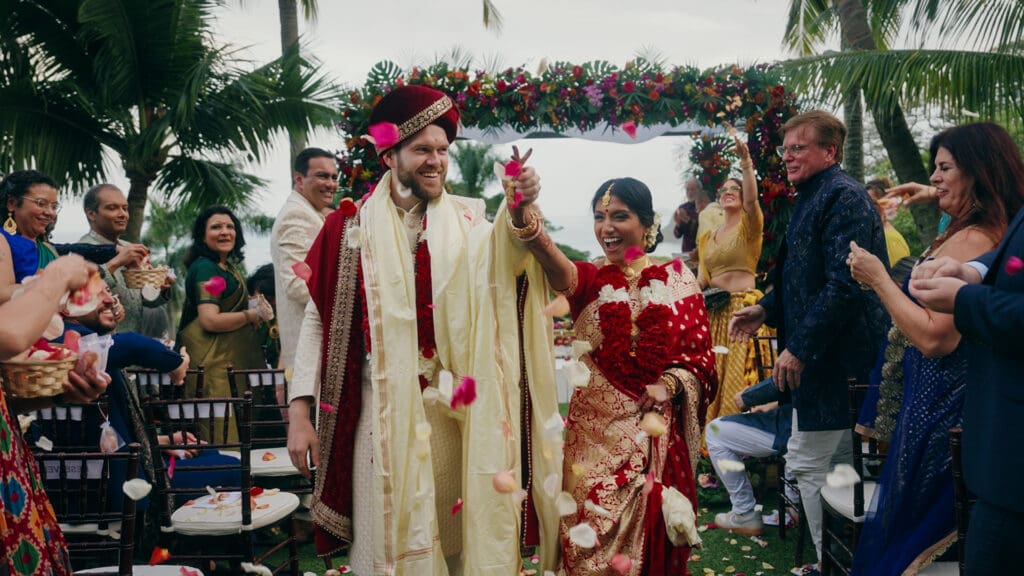
Your Wedding Film Guide: Tips and What to Expect on the Day
Your wedding film isn’t just about documenting what the day looked like. It’s the story of your relationship, your people, your energy, and the atmosphere of the day. The goal isn’t to “perform” or to create something overly staged – it’s to capture the real connection between you two, the quiet moments you don’t even notice when they happen, and the emotion that only shows up on the day you get married.
This guide has wedding film tips for couples who want a cinematic, natural, intentional wedding film. As a Big Island wedding videographer, I’ll be the one behind the camera. If you’ve already booked me, this guide will walk you through everything you need to know to help your film look the way you want it to, and help you feel your absolute best. And if you’re still searching for the right Hawaii wedding videographer for your wedding, this guide gives a look at the process and what you can expect from working together.
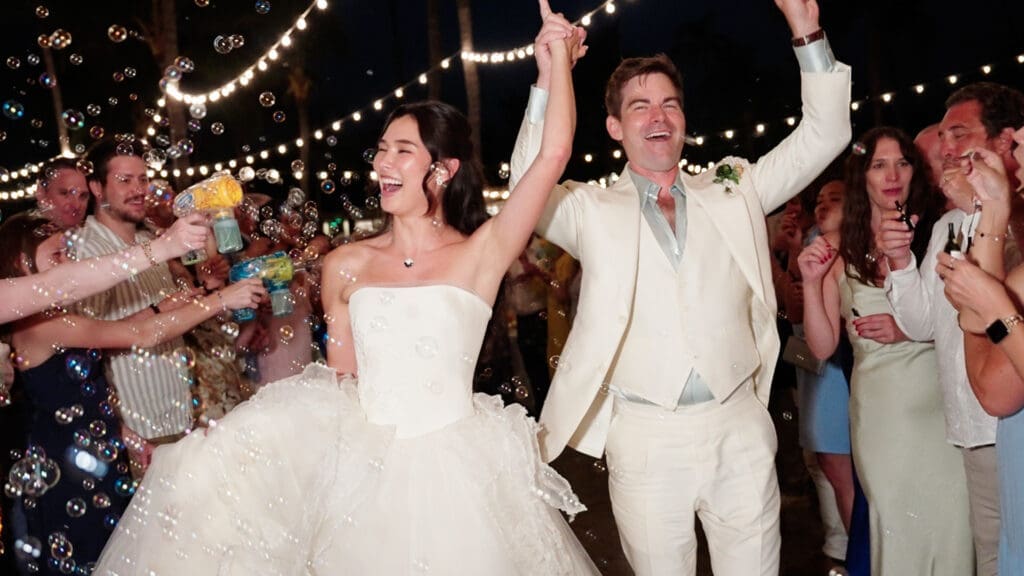
Wedding Film Tips
Here are some tips to incorporate to make sure your wedding video is everything you want it to be.
Tell Your Story
1. Write Meaningful Vows
This one is kind of a no-brainer, but writing your own vows is one of the best things you can do for your wedding film. Vows are the emotional core of a cinematic film. They’re the anchor for your narrative, your voice, your story, your commitment. And even if you don’t want to recite vows in front of all your people, private vows work just as well. This part is fundamental to the film, and it really helps.
You know your process best, but I recommend giving yourself some time to write them rather than waiting for the night before. They don’t need to be Shakespeare-level poetic or perfect, just honest. You can tell the story of how you met, how long you’ve been together, and the moment you knew this was the person you wanted to spend the rest of your life with. Small personal details, inside jokes, little quirks, all the everyday stuff is what makes your vows unique.
2. Read a Poem or Letter
If vows aren’t quite your thing, or you want to add something extra, a poem or a letter can be a great way to add a cinematic touch. Reading a personal poem on the mic is great for storytelling, and it gives me a lot of room to create something a little different than usual.
This works really well for couples whose wedding might look a bit different from the traditional setup. If you love the idea of writing or reading a poem, go for it. It’s a beautiful way to tell your story.
3. Interviews Are Awesome!
I love doing interviews on the wedding day. If you’re comfortable with it, I’ll sometimes sit you down during a little break and ask a couple of questions. I usually ask things like how you met and what your first impression of each other was. It’s a great way to add some extra story to your film, and more story is always better. I’m not trying to put you on the spot, I promise.
I like to do guest interviews too. Some guests are really receptive and have a great time with it, others not so much, and that’s totally fine. If you want, you can give your guests a heads up about this as well. Something simple like, “Hey, my videographer might come around and ask a few questions, no pressure.” That way no one’s caught off guard.
4. Keep Toasts Meaningful and Intentional
Toasts from loved ones add context, personality, and emotion to your wedding film. What usually works best is keeping it to 3-5 speakers total, and asking them to keep speeches under 10 minutes. This usually works better for the moment, keeping the audience engaged, and it works for the film too, creating better pacing and storytelling. Encourage your speakers to focus on specific details about the two of you, rather than on generalities. Meaningful, concise, heartfelt toasts always land better!
What to Expect on the Wedding Day
When I arrive during prep, one of the first things I’ll do is turn off the overhead lights. Harsh overhead lighting doesn’t look good on camera, but natural window light does. So if you notice me flipping switches when I walk in, that’s why.
I’ll also put a small lapel mic on the groom and the officiant before the ceremony. These are tiny and unobtrusive, and they’re what make your vows sound clear and intimate in the final film instead of distant and windy. If the venue’s audio team is already miking the groom, I’ll add my own as a backup anyway.
For the rest of the day I hang out in the background and read the energy of the room. If I feel like getting more creative and you’re open to it, I’ll go for it, but for the most part I stay low-key. People sometimes mistake me for the photographer’s assistant, and that’s exactly how I like it.
Movement and Light Matter More Than Posing
The main thing in videography is finding good cinematic light and getting you to move. Posing works for photography, but movement is what makes video come alive. A big part of my job is getting you to move naturally, whether that’s walking together, adjusting a boutonniere, or laughing with your wedding party.
It doesn’t have to be forced. Think of it like dancing around with your person. Twirling, holding hands, walking, looking back. I’ll guide you with prompts when needed, and some couples naturally move a lot on their own. Either way, I’ve got you.
Light is the other half of it. If I see direct light coming through a window, I’ll usually put you in it for video. So if you notice me steering you toward a certain spot, that’s why.
For video, you don’t have to look at the camera or perform. If you want to have fun with it, I love that energy. But if you’re just focused on enjoying your day, that’s just as good. Genuine emotion always reads better on film than a perfect pose.
Photo and Video Work Best as a Team
Your photographer will likely lead the direction of your day. They’ll guide posing, manage timing, and keep things moving. That’s a good thing, but it also means video can get squeezed out if no one’s thinking about it.
This isn’t anyone’s fault. Photographers focus on their job, and videographers tend to hang back and capture moments rather than direct them. The result is that video sometimes gets overlooked in the flow of the day.
The fix is simple. At some point during portraits or a lull in the timeline, just ask: “Do you need anything for video?” That one question opens up space and makes sure your film gets the same attention as your photos.
If you hired me for both photo and video, this is already handled. My team coordinates everything together so nothing gets missed. But if you’re working with a separate photographer, share this with them ahead of time. Most are happy to make room once they know it matters to you.
Give Your Guests a Heads Up
This one is small but it helps. Let your wedding party and close family know there will be a videographer at the wedding.
When I walk into a getting-ready room and people see a camera for the first time, they can freeze up. It’s completely natural. But if they already know I’m coming, they relax and go about their morning normally.
You don’t need to do anything formal. Just mention it before I arrive. I do a lot of candid filming throughout the day, so it helps people to know I’ll be pointing my camera around.
Candids
Candids are an important part of a wedding film, and there are moments I schedule specifically to capture them. Posed family portraits are great for photos but rarely work for video. During portraits I like to capture candid moments with your family or at cocktail hour instead of the posed stuff. So if you see me wandering around during group photos, I’m not slacking.
I don’t film people while they’re eating. It’s rarely flattering and doesn’t add much to the story, so dinner is usually when my team and I take a short break to eat too. A well-fed videographer is a focused one, and the film is always better for it.
Post Production and the Pre-Wedding Questionnaire
The wedding day is only half the job. The real work starts after, when I sit down to edit your film.
Editing video is time consuming. It’s an artistic process, more like painting than assembling clips. Every cut, every music choice, every color decision is intentional. A good wedding film takes time to craft, and I take that seriously.
One thing that makes a big difference is your pre-wedding questionnaire. I send this out about three weeks before your wedding. It’s not complicated, and you don’t need to overthink it. But it’s where I get to go behind the scenes of your life a little, understand your story, get a feel for the vibe of your day, and figure out how I want to approach your film. Fill it out thoughtfully and it will show in the final product.
Music is a big part of this too. You don’t choose the music directly, but your questionnaire helps me find something that genuinely fits. I’m not just picking a random track. I’m matching the music to who you are and how your day felt.
How You’ll Receive Your Film
When your film is ready, you’ll get a private viewing page on my website and a Dropbox link with your files. The best thing to do is download everything and save a copy to your own Dropbox or hard drive right away. Don’t rely on my link as your permanent backup.
All footage is backed up redundantly during and after your wedding. I take data protection seriously because I know what’s at stake. Just make sure you save your own copy when delivery comes through.
Wedding Film FAQ
You probably have a lot of questions about the wedding film process and the video itself. Here are a few common ones!
Can we choose our own music?
No, but for good reason. I license all music legally, which means I can’t use copyrighted songs or popular tracks by request. I get a lot of requests, and I wish it were as simple as adding “Can’t Help Falling in Love” and calling it a perfect wedding film, but it isn’t. Every song is chosen intentionally to match your story, the pacing of the day, and the overall vibe of the film. I spend hours curating music so it works with the visuals, not against them. My goal is to deliver the best film you’ve ever watched. All I ask is trust.
How long will it take to get our wedding film?
I know you’re excited about the film, and I do my best to get it to you quickly. But I also want to make sure it gets the time it deserves and that everything is just right. Wedding films are delivered within 12 weeks.
One thing to keep in mind is that summer, from late April through the end of July, is my busy season. Delivery during those months tends to run a little longer, though everything still lands within that 12 week window.
Can we request revisions?
You can request one small revision to your wedding film. This includes things like removing a moment or cutting a line from a speech. Larger changes might have additional editing fees.
Do we get raw footage?
You can. Raw footage is available as a paid add-on at any time. I generally don’t recommend it unless you’re a video nerd—it can be overwhelming to sort through hours of S-Log3 footage.
Make sure to have fun!
These are all practical tips, but honestly the most important thing is just to have fun on your wedding day.
Your film is a keepsake. Something cool to look back on. Think of it like being the main character in your own little movie, because you kind of are. The more you enjoy your day, the better your film is going to be.
I don’t take myself too seriously, and I don’t want you to either. My job is to show up, handle everything on the camera side, and make sure you have something real and meaningful to watch years from now. Your job is just to have the best day ever.
I can’t wait to be there for it.